How to Calculate Recipe Cost: Six Plain Steps
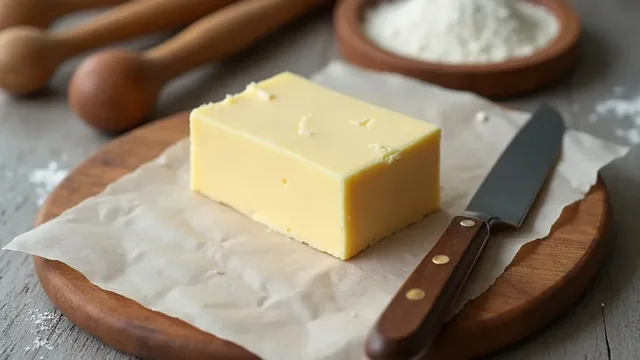
Costing a recipe for the first time feels harder than it is. Here is how to calculate recipe cost: turn each pack price into a price per gram, multiply by what the recipe uses, and divide by what it makes.
You do not need a calculator for this, only a receipt and a pen. The six steps below use one cake: an 8-inch cardamom pear layer cake with $6.40 of ingredients.
Every cost you leave off a recipe is a cost you pay out of your own pay.
| Step | What to do | What to watch for |
|---|---|---|
| 1 | Turn each pack price into a price per gram | Divide the price by the pack size |
| 2 | Convert pounds and ounces first | One pound is about 453.6 g |
| 3 | Multiply by what the recipe uses | Weigh it, do not guess it |
| 4 | Divide by what you actually sell | Count cakes that left the kitchen |
| 5 | Add your labor as its own line | Time one real batch |
| 6 | Add extras and overhead as separate lines | Box, board, liner, and a share of bills |
Step 1: Turn each pack price into a price per gram
Divide the price on the receipt by the size of the pack. Butter at $5.00 for 500 g is $5.00 ÷ 500 = $0.01 a gram. Eggs at $3.60 for 12 are $0.30 each.
Do this once per ingredient and write the unit price on a card or in a sheet. You will reuse it in every recipe that uses that ingredient.
Step 2: How to calculate recipe cost when the pack is in pounds
Many packs are in pounds or ounces. Convert them to grams before you divide. NIST gives one ounce as 28.349 52 grams and one pound as 0.453 592 4 kilograms, which is about 453.6 g.
Say your butter comes as a 1 lb block for the same $5.00. $5.00 ÷ 453.6 g is about $0.011 a gram. A recipe that uses 200 g costs $2.20, not the $2.00 you get from a 500 g pack. The gap looks small, and it repeats on every batch.
Cups, tablespoons and teaspoons are a volume, and their weight depends on the ingredient. Weigh one cup of your own flour once, write the grams on the card, and use that number from then on. Do the same for a tablespoon of anything you use often.
Step 3: Multiply by what the recipe uses
Price per gram times grams used gives the line cost. 250 g of flour at $0.004 a gram is $1.00. Add every line and you have the ingredient cost of the batch.
For the sample cake, that comes to $6.40. Include the small lines, such as the spice and the zest, because a $0.40 line repeated forty times is $16.00.
Step 4: Divide by what you actually sell
The batch cost is for everything the recipe makes. The cost you want is per thing you sell. Say a batch of 24 cupcakes costs $9.60 in ingredients. $9.60 ÷ 24 = $0.40 a cupcake.
Count what leaves the kitchen, not what the recipe promised. If two cupcakes crack and you cannot sell them, divide by 22 and the cost is $0.436 each.
Slices work the same way. A cake with $6.40 of ingredients, cut into 8 slices, is $6.40 ÷ 8 = $0.80 a slice. Count the slices you actually serve.
To skip doing steps 1 to 4 by hand for every ingredient, the Batch Recipe Cost workbook takes pack cost, pack amount, amount used and yield, and gives the line costs and the cost per cake.
Step 5: Add your labor as its own line
Labor is your time multiplied by an hourly rate. Time one real batch with a timer. If the sample cake takes 45 minutes at $18 an hour, labor is 45 ÷ 60 × $18 = $13.50.
For a first rate, the U.S. Bureau of Labor Statistics lists median pay for bakers at $17.86 an hour in May 2025. That is what an employer pays a baker, so treat it as a floor.
Time the shopping, cleaning and decorating for the order too, and add those minutes. Keep labor on its own line. It is 60 percent of this cake's cost, and a recipe cost that hides it will mislead you.
Step 6: Add extras and overhead as separate lines
Extras are the things that go with one order: a box at $1.25, a board at $0.85 and a liner at $0.40. That is $2.50. Overhead is your share of the bills that go on whether you bake or not. Penn State Extension lists building rent, loan payments, insurance and utilities as fixed costs.
To share them out, add up a month of those bills and divide by the cakes you bake that month. Say your shared bills come to $60 and you bake 30 cakes. Overhead is $60 ÷ 30 = $2.00 a cake. Those are round numbers for the sum only, so use your own bills and write the result as a line. For a batch of several cakes, multiply the per-cake figure by the cakes in the batch.
| Line | Sample cake |
|---|---|
| Ingredients | $6.40 |
| Labor, 45 min at $18 an hour | $13.50 |
| Box, board and liner | $2.50 |
| Total cost before overhead | $22.40 |
Where cost stops and price starts
Recipe cost is not a selling price. For the price, divide the total cost by one minus the margin you want. At 40 percent that is $22.40 ÷ 0.60 = $37.33.
The Batch Recipe Cost workbook does steps 1 to 4 only. It has no labor or overhead lines, so steps 5 and 6 stay in your head or in a second file. It also holds 16 ingredient rows and one batch. If you cost one recipe a year, paper is enough.
Doing the steps in a ready-made sheet
- Will it open in my app? The file is an .xlsx. It opens in Excel. For Google Sheets, upload it to Google Drive and open it with Google Sheets. Google's help page says an Excel file opened from Drive can be edited in Sheets.
- Why pay when free calculators and paper exist? You can do every step with paper or a blank sheet, and free online calculators give you a number to compare against. What $5.99 buys is the ten or so repeated sums done for you in a file you keep, with locked cells so a stray click cannot overwrite a formula. There is no free sample.
- What do I get? One workbook, by email after checkout. It does ingredients, parts and cost per cake. It does not do labor, extras, overhead or a price.
- What if I get stuck? Every sum is printed in this guide, so you can check any line by hand. The first tab, How to use, has three short sections.
If steps 1 to 4 are the part you dread, the Batch Recipe Cost workbook does them for each ingredient.
Frequently asked questions
How do I calculate the cost of a product?
List every cost in the product: materials, your labor, and packaging. Turn each material into a cost per unit used, add your labor at an hourly rate, add the packaging, and divide by the number of units you finish.
How to price a homemade craft?
The same six steps work for a craft. Cost the materials per unit, time yourself for labor, add packaging and a share of overhead, then divide the total cost by one minus your margin.
How do I calculate the cost of an item?
Add the cost of materials, labor and packaging for one finished item. If you make a batch, divide the batch cost by the number of items you can actually sell.
Conclusion
To calculate recipe cost, give each cost its own line. Ingredients come first, after you convert every pack to grams and divide by what you actually sell. Your labor is a separate line, and so are the box, the board and your share of overhead. On the sample cake, those lines are $6.40, $13.50 and $2.50, which total $22.40 before any margin. Keep the lines separate and you can see which one moved when a price changes.
Sources
- National Institute of Standards and Technology, NIST Guide to the SI, Appendix B.8: Factors for Units Listed Alphabeticallylast checked October 7, 2026
- U.S. Bureau of Labor Statistics, Occupational Outlook Handbook: Bakers (2026)last checked October 7, 2026
- Penn State Extension, Food For Profit: Price and Pricing (2026)last checked October 7, 2026
- Google, Use both Excel & Sheets: Best practices (n.d.)last checked October 7, 2026