Home Bakery Labels: Six Types to Know
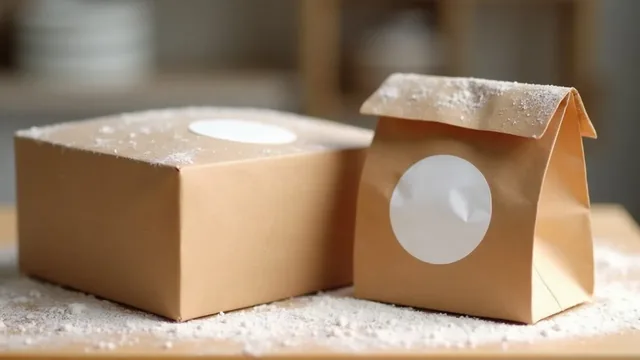
Selling from your own kitchen means every package leaves with some kind of label. Home bakery labels fall into six types: the product label, the home-kitchen statement, the ingredient and allergen block, the net weight line, the date and handling line, and a plain seal sticker.
Label rules for cottage food differ by state. The three states quoted here (Michigan, Texas and Florida) already disagree on what a label must carry, so treat your own state agency as the final word. Rules last checked October 2026.
Where home bakery labels come from
A home bakery label is any printed piece that goes on a package or an invoice. Some pieces are legal text that a state requires. Others are branding, and no state asks for them.
The picture below shows the pieces on one package.
1. The product label: what it is and who made it
Every state quoted here wants the maker's name and address on the package. Michigan's agriculture department says to use the physical address of your home kitchen, and says a post office box is not allowed. Florida's statute lists the name and address of the cottage food operation and the name of the product.
Texas lets you swap the address for a registration number. The Texas health department says you can register and print the number the state gives you instead of your home address.
Put it on every product you sell. It is legal text.
2. The home-kitchen statement: one sentence the state writes for you
Each state fixes the sentence. You do not reword it. Michigan asks for "Made in a home kitchen that has not been inspected by the Michigan Department of Agriculture & Rural Development" in at least 11-point type. Florida's reads "Made in a cottage food operation that is not subject to Florida's food safety regulations" in at least 10-point type. Texas asks for "THIS PRODUCT WAS PRODUCED IN A PRIVATE RESIDENCE THAT IS NOT SUBJECT TO GOVERNMENTAL LICENSING OR INSPECTION."
Copy the current sentence from your state's page each time you reprint. A reworded statement is not the statement the state named.
Every product in these three states needs it, copied word for word.
3. The ingredient and allergen block
Michigan wants ingredients in descending order of weight, with sub-ingredients listed. Florida wants the same order and adds allergen information as federal rules specify. Texas lists major allergens that must appear on the label.
The federal list has nine allergens: milk, eggs, fish, crustacean shellfish, tree nuts, peanuts, wheat, soybeans and sesame. The FDA says you can show them in parentheses after the ingredient or in a "Contains" statement.
Nearly everything you bake has flour, butter, eggs or nuts, so nearly everything needs this block.
4. The net weight line
Michigan requires net weight or volume with the metric equivalent, and its own example label reads "Net Wt. 3 oz (85.05 g)". Florida lists net weight or volume too. The Texas page reviewed here does not list a net weight line.
Weigh one finished package on a kitchen scale and write down the number. Sold-by-count items such as a box of six still need the line in the states that ask.
Cookies, loaves and bags need it in Michigan and Florida. Texas does not list it on the page reviewed here.
5. The date and handling line
Texas asks for more on foods that need time and temperature control for safety, such as a cake that needs the fridge. The label must show the date the food was made, and a handling sentence about keeping it refrigerated or frozen in at least 12-point type. A shelf-stable cookie does not need either under that rule.
Michigan limits cottage foods to ones that do not need refrigeration. Its list of foods you can make rules out cakes whose frosting needs the fridge, such as cream cheese frosting.
In Texas, a refrigerated cake carries both lines.
6. The seal sticker: branding only
A round sticker with your name or mark closes a box or bag and makes it look finished. No state quoted here asks for it. It cannot replace the product label, because it carries none of the required text.
The sticker is branding, not legal text. Add it only after the product label is done.
How to choose home bakery labels for each product
Count the packages you fill on a normal Saturday. Say 24 cookie bags, 6 loaves and 4 cakes. That is 34 packages and 34 product labels. Each one needs name, ingredients and statement, so the real work is making one label file you reuse.
| Product | Product label | Statement | Ingredients and allergens | Net weight | Date line |
|---|---|---|---|---|---|
| Cookie bag | Yes | Yes | Yes | Michigan, Florida | No |
| Bread loaf | Yes | Yes | Yes | Michigan, Florida | No |
| Boxed cake, shelf-stable | Yes | Yes | Yes | Michigan, Florida | No |
| Cake that needs the fridge (Texas) | Yes | Yes | Yes | Not listed | Yes, plus handling line |
A label is a promise about what is inside the package and who stands behind it.
You can use the Cottage Food Label workbook to keep those details in one place and print the Label tab. It does not write the legal sentence for you. The workbook is the wrong choice if you want many different labels on one sheet of sticker paper. It prints one label layout at a time on a Letter page. You can also make a label for nothing in a word processor. The state agencies publish the required sentences at no cost, and a text box and a ruler are enough. The workbook costs $5.99 and earns that only if you reprint often and want your details in one file.
Take a cake box next to a cookie bag. A shelf-stable cake in a box carries the product label, the statement, and the ingredient and allergen block, plus a net weight line in Michigan and Florida. A cookie bag carries exactly the same four pieces. The difference is the surface. A cake box has room for one large label on the lid. A small bag may need a folded label that wraps over the top.
Now count for a baker with five products. Five products need five product labels, because the product name, ingredients, allergens and weight change from one to the next. The name and address, the statement and the seal sticker stay the same on all five. So you design three fixed pieces once and rewrite two details per product.
Here is what each state's own page lists, side by side.
| Label part | Michigan | Texas | Florida |
|---|---|---|---|
| Name and address | Physical address, no post office box | Address, or a state registration number | Name and address |
| Ingredients | Descending by weight, with sub-ingredients | Major allergens listed | Descending by weight |
| Net weight or volume | Yes, with metric | Not listed | Yes |
| Statement size | 11-point or equivalent | No size named for the statement | 10-point |
Label mistakes to avoid on home bakery labels
Four mistakes are easy to make, and each has a simple fix.
- Rewording the statement. Each state names the sentence, so copy it exactly.
- Using a post office box. Michigan says the address must be the physical address of your home kitchen.
- Writing "nuts" for tree nuts. Michigan's page says you must name the tree nut, so "almonds" is acceptable and "nuts" is not.
- Listing "soy sauce" with nothing after it. Michigan wants the sub-ingredients too, for example "soy sauce (wheat, soybeans, salt)".
The Michigan labeling page gives all four with examples. Other states can differ, so check yours.
Which state page to read first
Rules change, and each state publishes its own. Michigan's agriculture department publishes its labeling page, Texas has a cottage food page at the health department, and Florida's rule is Section 500.80 of the state statutes. If you live elsewhere, search for your state's agriculture or health department and read its own page.
Confirm anything you print with your state, because the agency decides what counts.
Frequently asked questions
What are some good labels for home baked goods?
Start with a product label that shows what the item is and who made it, add the ingredient list with allergens, and add the statement your state requires. A plain seal sticker is optional and carries no legal text.
Where can I find bakery labels?
You can print your own from a spreadsheet or document, or buy blank label stock and print on it. Whatever you use, check the wording against your state agency's page first.
Conclusion
A home bakery needs fewer label types than it first looks like. Start with the product label, the state statement and the ingredient block, then add a net weight line or a date line if your state asks for one. Read your state agency's page before you print the first batch, and again once a year, because the wording changes.
Sources
- Michigan Department of Agriculture and Rural Development, Labeling - Cottage Food (archived 2026-06-17)last checked October 7, 2026
- Michigan Department of Agriculture and Rural Development, What Can I Make? - Cottage Food (archived 2026-06-17)last checked October 7, 2026
- Texas Department of State Health Services, Texas Cottage Food Productionlast checked October 7, 2026
- The Florida Senate, Florida Statutes 2025, Section 500.80 Cottage food operationslast checked October 7, 2026
- U.S. Food and Drug Administration, Food Allergies: What You Need to Know (2024)last checked October 7, 2026