Cottage Food Ingredient Labels: A Five-Step Guide
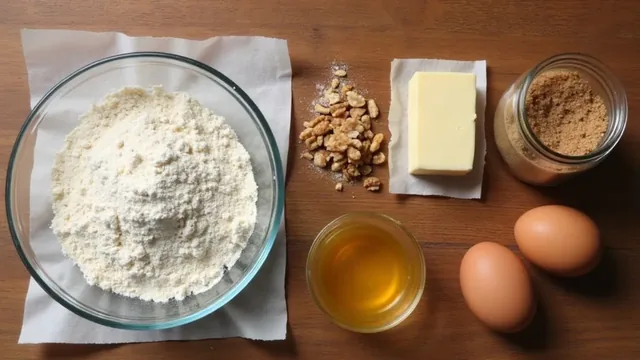
The ingredient list is the part of a label that bakers get wrong most easily. Cottage food ingredient labels list every ingredient from heaviest to lightest, spell out what is inside mixed ingredients, and name each allergen.
An ingredient list is arithmetic first and writing second. The five steps below take a recipe from a pile of weights to a finished list. The state rules quoted here were last checked in October 2026.
| Step | What to do | What to watch for |
|---|---|---|
| 1 | Weigh every ingredient | Use grams for all of them |
| 2 | Sort from heaviest to lightest | Ties can go either way |
| 3 | Expand mixed ingredients | Flour, butter and chips have parts |
| 4 | Flag the allergens | Name the exact tree nut |
| 5 | Compare with your state | Texas lists allergens, Florida wants the full list |
Step 1: Weigh every ingredient in the recipe
Write down the weight of each ingredient in grams, using the amounts that go into one batch. A kitchen scale does it in a minute. Use the same unit for everything, so you can compare the numbers.
The worked example below is a batch of chocolate chip cookies.
| Ingredient | Grams in the batch |
|---|---|
| Flour | 300 |
| Butter | 225 |
| Brown sugar | 200 |
| Chocolate chips | 170 |
| Eggs | 100 |
| Walnuts | 80 |
| Vanilla extract | 5 |
| Baking soda | 5 |
| Salt | 4 |
The batch weighs 1,089 grams in all.
Step 2: Sort from heaviest to lightest
The federal rule says ingredients go in descending order of predominance by weight, and Michigan's agriculture department asks for the same order. Sort your weights from the biggest to the smallest.
In the example, flour is first at 300 grams and salt is last at 4. Vanilla and baking soda both weigh 5 grams, so they can swap places.
Re-sort whenever you change a quantity. If the brown sugar rose from 200 to 330 grams, it would overtake the flour and move to the top.
Step 3: Expand the sub-ingredients on cottage food ingredient labels
Some ingredients are mixes. Michigan says that if you use a prepared item, you must list its sub-ingredients too, and gives the example of soy sauce. "Soy sauce" alone is not acceptable, but "soy sauce (wheat, soybeans, salt)" is. Read the package of each mixed ingredient and copy what is in brackets.
Michigan's own sample label shows the pattern with enriched flour (wheat flour, niacin, reduced iron, thiamine mononitrate, riboflavin and folic acid), butter (milk, salt), and chocolate chips (sugar, cocoa butter, butterfat (milk), soy lecithin as an emulsifier).
Salt, baking soda and spices are ingredients too, so they go on the list. Michigan's page says you must list all of your ingredients, and its sample label includes salt, baking soda and vanilla extract. The pages read for this article do not mention water, so ask your state about it.
Check again when you switch brands. A different brand of flour or chips can have a different list inside the bracket.
Step 4: Flag the allergens
The FDA lists nine major allergens: milk, eggs, fish, crustacean shellfish, tree nuts, peanuts, wheat, soybeans and sesame. You can show each in brackets after the ingredient or in a Contains statement. If you add a Contains line, it must list every allergen in the product.
For the cookies, the Contains line reads wheat, eggs, milk, soy, walnuts. Milk comes from the butter and the chips, and soy comes from the lecithin in the chips. Michigan also says a tree nut must be named, so write "walnuts", never "nuts".
Step 5: Compare the list with your state's rules
States differ on this line. Michigan wants all ingredients, in order, and says you must list all of them, trade secrets included. Texas's page lists the major allergens, not a full ingredient list. Florida's statute asks for the ingredients in descending order of weight and allergen information.
If your state asks for only the allergens, you may still want the full list on the label. Ask the state before you decide.
You can type the finished list into the Cottage Food Label workbook, which has separate fields for ingredients and for Contains.
A label is only as honest as the recipe behind it.
Four ingredient-list mistakes
- Writing "soy sauce" or "chocolate chips" with nothing in brackets.
- Writing "nuts" instead of the exact tree nut.
- Leaving the order as it was after you changed a quantity or a brand.
- A Contains line that misses an allergen hiding in a mixed ingredient, such as milk in butter.
Michigan also says you cannot hold back an ingredient as a trade secret. Every ingredient goes on the list.
When the workbook is the wrong choice
The Cottage Food Label workbook does not weigh, sort or check an ingredient list. You still do that by hand, and a notebook works as well. It stores and prints what you type. If you only ever make one product, a word processor document does the same job for nothing, and the state pages cost nothing either. The workbook costs $5.99 and helps when you rotate several products and want each set of details in one file. Its How to use tab names no app menu, only the Details and Label tabs, so the steps read the same in Excel and in Google Sheets.
Read your state's page for the exact rule, such as Michigan, Texas, Florida, or the agriculture department of your own state.
Frequently asked questions
What to put on a cottage bakery label?
The product name, your name and address, the ingredients in order of weight, allergens, the net weight where your state asks for it, and your state's required statement. Check your state's page for the exact list.
How to make labels for cottage food products?
Work out the ingredient list and allergens first, then put them with the name, the maker's details and the state statement on one page and print a test copy.
Conclusion
An ingredient list takes five checks: weigh, sort, expand, flag the allergens, and compare with your state. Do the sorting again whenever you change a quantity or a brand, because the order and the sub-ingredients can both move. Confirm the finished list with your state, because the agency decides what counts.
Sources
- Michigan Department of Agriculture and Rural Development, Labeling - Cottage Food (archived 2026-06-17)last checked October 7, 2026
- U.S. Food and Drug Administration, Food Allergies: What You Need to Know (2024)last checked October 7, 2026
- Electronic Code of Federal Regulations, 21 CFR 101.4 Food; designation of ingredientslast checked October 7, 2026
- Texas Department of State Health Services, Texas Cottage Food Productionlast checked October 7, 2026
- The Florida Senate, Florida Statutes 2025, Section 500.80 Cottage food operationslast checked October 7, 2026